Showing posts with label Eagles. Show all posts

New Uniforms for 2023: An Impartial Ranking

 As we approach kickoff for the 2023 Hall of Fame Game in Canton and the official start to the 2023 Preseason, let us take a few moments to review the new uniforms and helmets that we will be seeing throughout the season.

I have ranked the 13 new uniform additions by team, whether it be a single new helmet or a completely new uniform. Additions that were used last year like the Pat Patriot throwback helmet/uniform in New England or the return of the red helmet in Atlanta are not included.

Here we go.

#13 - INDIANAPOLIS COLTS


Nothing about what the Colts did makes sense. They have a regular blue jersey. They have a blue throwback jersey. Why do they need a third blue jersey? From a distance, the pattern in the new blue jerseys will likely be hard to detect. The black outlines around the white numbers will be hard to notice due to being against the aforementioned blue. And this doesn't even take into account how ridiculous these jerseys will look if the Colts also add 'Captain' patches onto the other side opposite the alternate logo placed on the left collarbone.


As for the black helmet, we likely should have seen this coming as a few years ago the Colts changed the color of the Nike swooshes on their white jerseys from blue to 'anvil black.' So does that mean anvil black is now a Colts color?

The Fix: The Colts should have just kept it simple and only added a dark-royal-bordering-on-navy helmet to pair with the blue throwbacks. When you overthink, this is what happens.

Grade: F


#11 (tie) - DENVER BRONCOS

There's a tie for the  #11/#12 spots. Denver comes first alphabetically so I'll explain them first.

A white helmet. That's it. To be paired with Color Rush / Throwback-styled orange jersey and orange pants. 


Why? What does Denver gain from this? They aren't going to have lucrative merchandising increase for a new helmet. The Color Rush costume hasn't changed (the helmet logo has minutely) since it came to be in 2016.

What's worse? In the reveal video, one Bronco is wearing the all-orange costume with orange socks, too. A second Bronco is wearing white socks paired with the all-orange. It doesn't seem like the team even knows what it's going to do with them.

The Fix: Denver has had the same Color Rush uniform since 2016. Alter it by replacing the navy blue with light royal blue trim. Add a light royal blue helmet in the same style. Add appropriate stripes to the socks. Boom.

Grade: D+


#11 (tie) - DETROIT LIONS

A new blue helmet is added for the sole purpose of pairing it with the awful all-grey Color Rush uniform.


I'll ask again...Why? The short answer is that the all-grey uniform didn't match with the normal Detroit silver helmet. I can understand that. But then you create a blue helmet to rectify that one problem and you don't even bother to correctly match the blues of the helmet and jersey? At least it matches the blue of the anniversary patch the Lions will be wearing this year.

The Fix: Detroit's heart was in the right place and their intentions were good. Fix the helmet's shade of blue to match. This oversight reminds me of when the Vikings brought out their current look and their helmets bore a shade of purple that looked like the paint guy at Home Depot put in a little too much red and way too much white when trying to match colors resulting in a lighter, redder shade of purple. It's an easy fix. Admit it. Fix it. Boom.

Grade: D+ (can go to a C if they fix the blue)


#10 - HOUSTON TEXANS

This change may well have slipped under the radar. Select teams are not only adopting Nike's new FUSE template for their jerseys this season, but a small percentage are also using a modified version of the FUSE that has a straight seam across the upper chest rather than the more visible V-shaped seam. Houston is one of those teams. Incorporating that modified FUSE has enabled Houston to 'flip their horns.' Since their inception, the Texans' shoulder stripes (horns) have narrowed to a point directed away from the body. These new horns curl ever so slightly towards the center of the torso instead.


Was this change needed? No. Will it change how we view the Texans' uniforms in a bubble? No.

The Fix: This was a change that wasn't needed. For good or for bad, there's nothing to really fix. It's just...different.

Garde: C-


#9 - CAROLINA PANTHERS

The Panthers' changes were two-fold. 

They altered the hoop-stripes. The only problem is that there are still going to be variations of how those stripes look due to the tailoring of jerseys for players of different positions. This is the same problem Carolina has had for a while.


The second change was in tweaking the shade of blue. Honestly, if no announcement had been made, you'd have been hard pressed to find someone in Bank of America Stadium that said "Gee. Their blue sure looks different this year."

So they altered the hoop-stripes but still have wide variations in how they will look. They changed the shade of blue and almost no one will notice.

The Fix: Find a way to tailor these stripes so that they appear the same on all player positions. Worse comes to worse, change them to look the same as the Colts' hoop stripes. Vary the width of the stripes rather than having all three the same as the Colts do.

Grade: C


#8 - ARIZONA CARDINALS

The uniforms that the Cardinals have worn for the past 18 seasons were dated and bad. Not a good combination. This is a change that needed to happen sooner rather than later and that's why I have them rated one notch above Carolina.

Is there something that will make your eyes pop out of your head and go WOW!?! No.


An overdone uniform was replaced by a minimalist uniform. It's addition by subtraction. They're not great by any stretch, but they're an improvement. I think we all can agree on that.

The Fix: Remove the obnoxiously large wordmark on the chest of the red jersey or simply replace it with 'CARDINALS' in smaller type similar to what is on the sleeves of the other two jerseys. 

I still maintain that Arizona missed the boat by using silver instead of copper. Arizona is the Copper State and a dark copper would have made for a much better trim color. The silver that is used will be hard to see against the white next to it. 

The other fix will be to mix-and-match within reason. The reveal only included mono-everything: white, red, and black. Hopefully, like Washington who did the same thing at their reveal a year ago, they won't be afraid to mix things up.

Grade: C (C+ if they mix-and-match)


#7 - CLEVELAND BROWNS

Two years ago, the Browns celebrated their 75th Anniversary by introducing an all-white throwback to their very first season - 1946. However, due to the One-Helmet Rule, the Browns had to use their regular orange helmets with modified features to pair with them. Now, with the OHR discontinued, Cleveland introduces a white helmet to pair with the throwbacks.


While the 1946 leather helmet was plain white, the Browns have added stripes and a browns facemask. Despite the stripes, the white helmet is a wonderful nod to the team's history despite technically not being totally accurate.


The Fix: Honestly the stripes shouldn't be there if the Browns were attempting to construct honest throwbacks to 1946. But someone probably had to be THAT GUY in the room that said "I know its supposed to be plain white but it's just TOO plain. Add some stripes." These are the Browns. The 'No-Logo-On-The-Helmet' Browns. Plain is in their DNA and they love it. Lose the stripes.

Grade: B


#6 - NEW YORK JETS

The Jets surprised the football world by unveiling throwback uniforms from the 1980s. The correct helmet logo is placed on the current metallic green helmet. No biggie. The uniform is a great representation of the look the throwback is mimicking. Jets fans will like it. 


The Fix: The only question I have is why is this franchise all of a sudden so averse to wearing green jerseys or pants? After the 2022 Preseason last year, the Jets wore green jerseys and pants together once and green pants below white jerseys once. That's it. Two games. Every other game was a combination of white or black pants and jerseys. I get that in the first half of the 1980s, the Jets wore white at home most of that time. However, with an infusion of green desperately needed, why not use the green throwback jersey instead?

Grade: B


#5 - SEATTLE SEAHAWKS

These throwbacks look phenomenal. The blue pops. The green is bright. The silver helmets sparkle. So why are the Seahawks only #5 for me?

It really isn't their fault. Due to modern jersey tailoring, sleeves nowadays probably only have about 40% of the area to work with compared to the jerseys they are trying to duplicate. For me, part of the appeal for the Seahawks' jerseys were how the stripes exiting behind the bird-head logo, continued all the way around the sleeve, and back around to the beak again. It was a brilliant effect, but, due to the minimal amount of space to work with, the current design can't offer that. 


The same can be said with the helmet logo. Due to modern helmets and their design, the facemask and chinstrap snaps force many helmet logos onto the back half of the helmet for several teams. This is one of those cases. One Twitter follower said he thought he was looking at a 1970s football card of DK Metcalf because he was positioned facing the camera (below) and the logo could not be seen. He honestly thought they had forgotten to add the logo to DK's helmet or that, as in cards from the 1970s, it had been airbrushed off. The result is that the amount of helmet logo that can be applied to this throwback's helmet is greatly reduced.


The Fix: Unfortunately, there isn't one. We are limited by the times. That incudes Nike's inability to reproduce the shiny silver pants that we should be getting with these uniforms. The Seahawks did well with what they had. They did a great job replicating a classic look that fans all over will love. No one will say "That's a terrible looking uniform."

Grade: B+


#4 - PHILADELPHIA EAGLES

Finally, kelly green has come back to Philadelphia. The thing I like the most about these uniforms is how the Eagles didn't have to use some sort of gimmick to get the correct logo to fit onto the sleeves. No abbreviated stripes. No reduced size. Just right.


The pants have the correct striping and are pretty close to the shade of grey/silver. The only regret here is that Nike could not replicate the sheen of those original pants (See "Big Jerome" below). It also seems like the helmet is lighter green than the jersey instead of being darker than the jersey. The helmet is significantly lighter overall compared to its predecessor. The sock stripes also appear to have thinned somewhat.


The Fix: The only thing I'd tamper with here is to darken the green of the helmets. Unfortunately, it's highly unlikely that Nike is capable of fixing the pants otherwise they'd have already done it for the reveal. Oh, and where the heck are the black shoes? Black shoes are a must for these.

Grade: A-


#3 - MINNESOTA VIKINGS

Let me start by saying that I'm not a Vikings fan. Their new throwback uniform goes back to their original look from 1961 and the first half of that decade, which is new ground for a Vikings throwback. Truthfully, everything about this uniform is 'spot-on.' Except for one detail. The helmet.
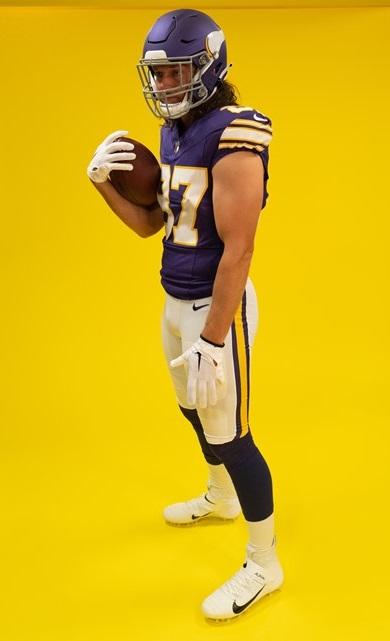

Why, if you are putting so much effort to get the look just right, do you make perfect versions of the jersey & the pants, but then drop the ball on the helmet? And here's the kicker...the Vikings are actually using a second helmet shell of a different color than their regular shade of purple. They had a chance to use the era-accurate glossy dark purple helmet shell. Instead, they opted for a lighter, matte purple than what was called for.


The Fix: If these throwbacks stick around, which I would guess they would, next year's throwback helmet will likely get fixed. I feel safe in that assumption. Why? Because the Vikings have done this before. 


As I stated in discussing Detroit's new helmet, when the Vikings debuted their current uniform set in 2014, the helmet didn't match. It was much too light. And it was highly noticeable on TV, to boot. Unfortunately, it took until 2019 for the Vikes to fix their purple helmets. But the point is, they did. This fix won't take as long. And like Philadelphia, these uniforms absolutely require black shoes, as well.

Grade: A-


#2 - TAMPA BAY BUCCANEERS

Bucco Bruce and the creamsicle orange jerseys have returned. Nike went the extra mile and made these versions a more vibrant shade of orange than their 2012 efforts which were much paler by comparison. Even the red trim really jumps out at you. These were extremely well done and historically accurate.


The Fix: Nothing. But there is one thing to look for as far as being historically accurate. On the back of the helmets where the striping ends, the Bucs have always cut off the bottom corner of the red stripes' outer edges. It's a quirky little detail that I will be looking for. For some reason, the Bucs' reveal didn't include photos of the backs of the helmets.


GRADE: A


#1 - TENNESSEE TITANS

Sorry to disappoint, Bucs fans, but these are just a little bit better. And it's funny but no one will look at these uniforms and call them Titans' throwbacks. These are OILERS uniforms.

Why are they better? Accuracy and attention to detail. The number fonts are a perfect match. The bold red outline goes BANG when you see them. But the best part of all is how they purposely mismatched the blues. Normally, this would be a problem but not here. Historically, these Oilers' blue jersey uniforms were done using two similar, but separate, shades of blue. 


The jersey's blue needs to match the blue pants stripe. It does. The blue of the socks is slightly darker and matches the blue in the helmet logo and stripe. They do. You had to be aware of this ahead of time to plan the outcome the way it needed to be. They did. And it's magnificent.

The Fix: Are you kidding??? One thing, Titans. PLEASE do not have players disrespect one of the greatest uniforms ever by wearing plain white socks instead of, or overtop of, the actual uniform's socks. PLEASE!

Grade: A+


That wraps it up, folks. One thing is certain, in a League dominated by darker colored jerseys, the majority of these throwbacks bring us back to a day when vibrant, colorful uniforms adorned our TVs every Fall weekend. That is a very good thing.


Bill Schaefer


Steve Van Buren, Mr. Eagle


Steve Van Buren, arguably still the greatest Philadelphia Eagle of them all, passed away on August 24, 2012.  While his death stirred little news outside of Philadelphia and possibly Baton Rouge, Louisiana, where he attended college at LSU, his impact on the annals of NFL history is immeasurable.


In his sophomore NFL season,
Van Buren scored 110 points
on 18 TDs (15 rushing,
2 receiving, 1 kick return),
astronomical numbers for his day
Born in Honduras, he played for the Eagles from 1944 through 1951, only eight seasons, but in those eight seasons he had 5,860 rushing yards, which was an NFL record that lasted until Jim Brown came along.  He also led the NFL in rushing four times; 1945, 1947, 1948 and 1949.  He, Brown (twice) and Emmitt Smith are the only rushers to lead the league three consecutive seasons.  He was a consensus All-Pro five times, and the first Eagle ever inducted into the Pro Football Hall of Fame, entering in 1965,  in only the third class of enshrinees in the Hall's history.  In 1994, he was selected to the NFL's 75th Anniversary Team.

~ ~ ~ ~ ~


It is the years of 1947, 1948 and 1949 the we will focus on here.  For in those three seasons, the Eagles truly hit their golden era.  The Eagles made the NFL Championship Game in 1947 by winning a tiebreaker game at Pittsburgh (the Steelers only playoff game in 39 years) for the Eastern Division crown.  The Birds then lost a back and forth thriller against the Cardinals at Comiskey Park in Chicago, 28-21.  Although Van Buren did get a touchdown in the game, on a one yard plunge, he was held in check by the Cardinals defense, racking up only 26 yards on 18 carries.

~ ~ ~ ~ ~


In the 1948 Championship Game at Shibe Park in Philadelphia, commonly known nowadays as the Blizzard Bowl, Van Buren scored the lone touchdown in the game, late in the fourth quarter, a five yard romp off right tackle.  The Eagles won their first NFL title, 7-0.  In spite of the nearly white-out conditions, Steve was a workhouse, plowing for 98 yards on 26 attempts.  Van Buren almost missed the game. Thinking the game would not be played due to the weather, he remained home until Eagles coach Earle "Greasy" Neale called him and told him the game was still on. He had to catch 3 trolleys and walk 6 blocks in order to make the game on time.


~ ~ ~ ~ ~

Early in his sixth season, on a Monday Night in Detroit (on a game that was broadcast -- at least by 1949 standards -- on ABC over 20 years before Monday Night Football began) Van Buren broke Clark Hinkle's NFL career rushing record of 3860 yards, rushing for 135 yards on 33 attempts with two touchdowns against the Lions.  

Later in the season, on the Sunday after Thanksgiving, he had one of his best games of his career, rushing for 205 yards against the Pittsburgh Steelers. Led by Van Buren the Eagles coasted to an 11-1 record and won the Eastern Division to reach their third consecutive NFL Championship Game where they would face the Los Angeles Rams. This would be the first championship game ever played on the west coast, and the Eagles won their second straight title, defeating the Rams 14-0 at the Coliseum.  The game was played in a steady flow of rain.  Though he didn't score, and though the field was quite treacherous, Van Buren was certainly the player of the game, racking up an astounding 196 yards on 31 rushes, including a long one for 49 yards.


~ ~ ~ ~ ~

In the two Eagles championship games that were played in, to be kind, miserable conditions -- Van Buren racked up an incredible 294 yards on the ground.  He was definitely a "clutch" player to be sure!
   

~ ~ ~ ~ ~


Steve's number 15 has been long retired by the Eagles.  While at the time of this writing it is uncertain how the Eagles will memorialize SVB on their uniforms, I would certainly hope it would be with the jersey patch as opposed to a 1" decal on the helmet.  The Gridiron Uniform Database remembers Steve Van Buren, still the highest flying Eagle of them all.


(Information courtesy of pro-foootball-reference.com and wikipedia.org)


Super Bowl XIX


Super Bowl XIX
by Rob Holecko

Twenty-seven years ago today, on January 20, 1985, the San Francisco 49ers defeated the Miami Dolphins in Super Bowl XIX 38 to 16.  It was Joe Montana and the 49ers' second Super Bowl in four years, and it was a very memorable game.  It was played in Stanford, California, the closest a team has ever come to playing a Super Bowl in it's home stadium.  It was the first Super Bowl televised by ABC.  President Ronald Reagan, on the day of the inauguration of his second term in office, conducted the coin flip from the Oval Office.

As for the game itself, from Wikipedia:
Instead of the predicted shootout between Dan Marino and Joe Montana, the game was mostly one-sided. The 49ers defense only allowed 25 rushing yards and 16 Dolphins points. San Francisco also intercepted Marino 2 times and sacked him 4 times. The Dolphins set a Super Bowl record for least rush attempts in a game (9).

But in the opening minutes of the game, it seemed that the game would live up to the hype. On the opening kickoff, 49ers rookie kick returner Derrick Harmon caught the ball too close to the sidelines and stepped out of bounds at the San Francisco 6-yard line. The 49ers managed to advance to the 41-yard line but were forced to punt, and Dolphins defensive back Fulton Walker returned the punt 9 yards to the Miami 36-yard line. Then on their first play of the drive, Marino completed a 25-yard pass to Tony Nathan. Five plays later, Miami reached the San Francisco 23-yard line. But on third down, 49ers cornerback Eric Wright tackled wide receiver Mark Clayton 2 yards shy of the first down. Miami had to settle for a 37-yard field goal from Uwe von Schamann.

The Dolphins' 3-0 lead did not last long, as the 49ers stormed down the field on their next possession. San Francisco drove 78 yards in 8 plays, culminating in a 33-yard touchdown pass from Montana to reserve running back Carl Monroe to give them a 7-3 lead. But Miami retook the lead on their ensuing drive. After a 5-yard rush by Nathan, the Dolphins went into a no-huddle offense, preventing the 49ers from making substitutions and keeping their run defense on the field. Marino completed five consecutive passes, hitting Clayton for 18 yards, Mark Duper for 11, Clayton again for 13, and tight end Dan Johnson for 21. On the next play, Marino finished the drive by hitting Johnson for a 2-yard touchdown pass, giving the Dolphins a 10-7 lead with 45 seconds left in the first quarter.

In the second quarter, the 49ers began to take control of the game. Bill Walsh switched to a 4-1-6 (or dime defense) to slow down Miami's passing attack, with Keena Turner as the sole linebacker. Miami tried to run against the 4-1-6 alignment, to no avail. Safety Dwight Hicks broke up two consecutive Marino passes, and the Dolphins were forced to punt from their own 10-yard line. Then after taking the ball at the Miami 47-yard line, Montana scrambled for a 19-yard run, and then completed a 16-yard pass to wide receiver Dwight Clark to reach the 12-yard line. From there, Wendell Tyler rushed for 4 yards, and then Montana threw an 8-yard touchdown pass to Roger Craig, giving the 49ers a 14-10 lead.

Miami then had to punt again on their ensuing possession, and San Francisco defensive back Dana McLemore returned the ball 28 yards to the 49ers' 45-yard line. After advancing 15 yards with 2 running plays, Montana completed a pair of passes to tight end Russ Francis to move the ball 29 yards to the Miami 11-yard line. Craig ran for 5 yards on the next play, and then Montana ran the final 6 yards to the end zone for a touchdown, making the score 21-10. After the ensuing kickoff, Miami again was forced to punt after 3 plays, and McLemore returned Reggie Roby's 39-yard punt 10 yards to the 49ers' 48-yard line. Montana was sacked for a 5-yard loss by Doug Betters on the first play of the ensuing drive, but he struck back with a 20-yard completion to Craig and a 7-yard run over the next two plays. On the next play, wide receiver Freddie Solomon caught a pass from Montana, took one step, and then lost the ball due to a hit from safety Lyle Blackwood. Blackwood quickly recovered the ball and took off for the 49ers end zone, but field judge Bob Lewis blew the play dead, ruling that Solomon's fumble was an incomplete pass. Bill Quinby, the side judge, who was nearest to the play, did not make any call. Five plays later, Craig finished the nine play, 52-yard drive with his second touchdown on a 2-yard run, increasing the 49ers lead to 28-10.

With about two minutes left in the half, the Dolphins finally managed to get a good drive going on their next possession. Marino completed 7 out of 9 passes, the last one being a 30-yard pass to tight end Joe Rose, to reach the 49ers 12-yard line. But San Francisco's defense tightened up on the next 3 plays, forcing 2 incompletions and a completed pass for no gain, and Miami was forced to settle for Von Schamann's second field goal of the game to cut their deficit to 28-13 with 12 seconds left in the half. Then Miami caught a break as the 49ers botched the ensuing kickoff. San Francisco lineman Guy McIntyre received Van Schamann's short kick and was about to down the ball, but then changed his mind at the last second and decided to return it. This turned out to be a big mistake. McIntyre lost a fumble while being leveled by rookie Joe Carter, and Jim Jensen recovered the ball for Miami at the 49ers 12-yard line. After that, Von Schamann kicked his third field goal on the last play of the half, cutting the score to 28-16. "I can laugh about the play now, but it wasn't funny at the time," McIntyre said after the game. "My first instinct when I got the ball was to fall down. Then I heard everyone yelling, 'Get up! Get up!' So I got up, and here comes someone sneaking underneath me, and he hit the ball."

But any thoughts of a Miami comeback ended early in the third quarter. On the first play second half, 49ers defensive end Dwaine Board tackled Nathan for a 1-yard loss. Then after Marino threw an incompletion, Board sacked him for a 9-yard loss on third down. For the fourth time in the game, Roby had to punt, and again McLemore gave the 49ers good field position with an 8-yard return to San Francisco's 47-yard line. The 49ers then drove 43 yards and scored on kicker Ray Wersching's 27 yard field goal. On the Dolphins' ensuing drive, they were forced to punt again after Marino was sacked twice (once by defensive lineman Manu Tuiasosopo and once by Board). Starting their own 30-yard line after a 5-yard return by McLemore, Montana completed a 40-yard pass to Tyler, followed up with a 14-yard completion to Francis. Three plays later, Craig scored his third touchdown on a 16-yard reception to make the score 38-16. The score proved to be the last one from either team, as the defenses of both teams took over for the rest of the game - especially the 49ers' defense, who intercepted Marino twice.

Overall, San Francisco gained a Super Bowl record 537 yards, breaking the Oakland Raiders record of 429 yards in Super Bowl XI, while limiting Miami to 314, with just 25 rushing yards. San Francisco's 38 points also tied a Super Bowl record set by the Raiders in Super Bowl XVIII.

The 49ers' 288 offensive yards in the first half also tied the Raiders in Super Bowl XI for the most offensive yards in a half during a Super Bowl.

Marino finished the game with 29 out of 50 pass completions for 318 yards, 1 touchdown, and 2 interceptions. Clayton was the top receiver of the game, with 6 receptions for 92 yards. Walker returned 4 kickoffs for 93 yards and gained 15 yards on 2 punt returns. Nathan was the Dolphins leading rusher with 18 yards, while also catching 10 passes for 83 yards.  Craig had 58 rushing yards, 77 receiving yards, and 3 touchdowns. He was the first player ever to score 3 touchdowns in a Super Bowl, and his 2 touchdown catches also tied a Super Bowl record. Tyler led San Francisco in rushing with 65 yards, and also caught 4 passes for 70 yards. Clark caught 6 passes for 77 yards. Board recorded 2 sacks. McLemore recorded 51 punt return yards, the second most in Super Bowl history.
We are proud to add this game to the Gridiron Uniform Database.  Also today we are launching a new page today, the index of Super Bowl Matchup graphics.  As we add Super Bowl matchups to the website today, you'll find all of them here, you'll see a new link on the front page.  We'd like to thank Mark Young, who a few months ago designed our new banner graphics, for putting together the roman numeral graphics on this page.

Also on this day, five years previous to Super Bowl XIX, the Rams and the Cowboys met in Super Bowl XIV.  This was the game that saw the Steelers put the cherry on the top of their 1970s dynasty, winning their fourth Super Bowl in six years.

~ ~ ~

Another On This Day... that we'd like to mention.  Yesterday was January 19, and while there has never been a Super Bowl on January 19, we would like to recognize a particularly memorable game from nine years ago.  As a Buccaneer fan, while I realize that the Super Bowl victory over the Raiders is definitely the crowning achievement of our franchise, it was Ronde Barber's interception return of a Donovan McNabb pass for a touchdown that clinched the NFC Championship against the Eagles, that was the moment from that season that was most memorable.  After having lost at Philadelphia in the playoffs the past two seasons, after having never won a game below forty degrees, to go into Philadelphia and win that game to go to the Super Bowl, was really the best moment ever for the Bucs in their 35 years of existence.


Record Setting Night


Record Setting Night
by Rob Holecko

Last night, Saints QB Drew Brees broke Dan Marino's 1984 single-season passing mark of 5,084 yards on his final throw of the night, a touchdown that gave him 5,087 yards for the season, with one more game still to play.  The Saints beat the Falcons and clinched the NFC South title.


Throughout the night, during the telecast they referred to the record, giving a countdown of how many yards Brees needed.  They flashed back to 1984 and the Monday Night game at the end of the year against the Cowboys when Marino set the record.  They talked about the evolution of the record, from Sammy Baugh and John Unitas, and then in 1967, in the AFL, Joe Namath became the first to pass for 4,000 yards in a season.  Dan Fouts broke that record three consecutive years, in 1979, 1980 and 1981, and then Marino in 1984 passed for 5,084, a record that has stood since then.

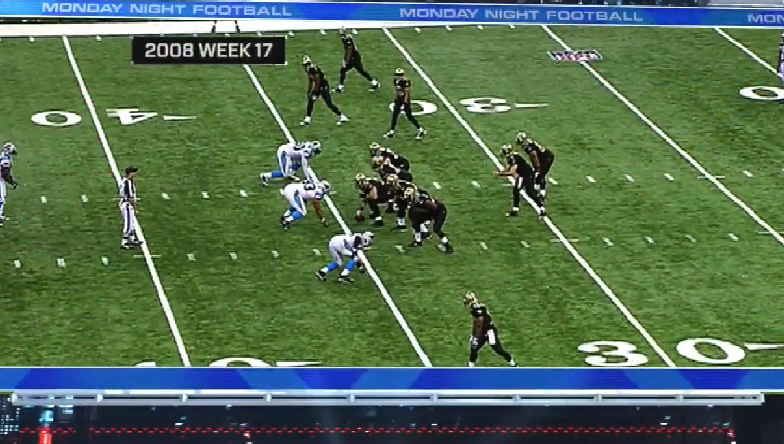
In 2008, Brees got close to breaking the record a first time, throwing an incomplete pass on the final play of the season against the Carolina Panthers and winding up at 5,069 yards.

But this time he closed the deal, and he'll get to add to it next week, possibly they won't rest their starters in the season finale as the Saints still have a chance at a first-round bye, if they can win although they'll need the 49ers to lose to the Rams, possibly a tall order.

It was an exciting night in the Louisiana Superdome Allstate Car Carriers Big Old Round Building Mercedes Benz Superdome, possibly the biggest since the 2009 Super Bowl run, a with it being a Monday Night against the Falcons, it was reminiscent of the 2006 Week 3 game against the MNF Falcons when the Saints re-opened the dome after losing the 2005 season to Hurricane Katrina.

The Saints that year, after a dismal 2005 season went all the way to the NFC Championship game where they lost to the Bears, and three years later won Super Bowl XLIV.

Tom Brady has 4,897 yards going into his finale against Buffalo, so he also has an outside chance of passing 5,000 yards and Marino's mark.

Next week Brees also has a chance of passing Peyton Manning's record of 450 completions in a season, he finished last night with 440.

~ ~ ~

"On This Day..."

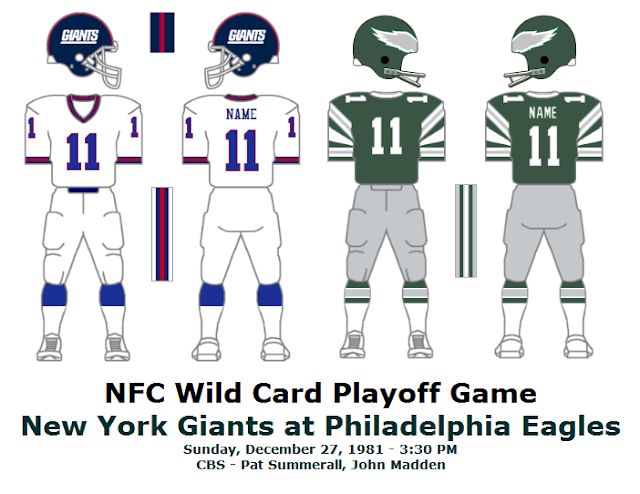
Last week all the talk (in and around New York anyway) was the Giants-Jets game, but today we will look back to another day where the focus of the NFL was all on the New York teams.  On December 27, 1981, the two NFL Wild Card games were played as the Bills and the Jets faced off at Shea stadium in the early AFC game, and the Giants and Eagles faced off in the NFC game in Philadelphia.


Here's a quick summary of this game from Wikipedia:
Bills defensive back Bill Simpson's interception at the Buffalo 1-yard line with 2 seconds left in the game preserved a 31-27 victory and gave Buffalo their first playoff win since 1965.

The Bills jumped to a 24-0 lead by the second quarter. First New York's Bruce Harper fumbled the opening kickoff while being tackled by Ervin Parker, and Charles Romes returned the ball 26-yards to the end zone. Then after a punt, quarterback Joe Ferguson completed a 50-yard touchdown pass to wide receiver Frank Lewis, while interceptions by Simpson and linebacker Phil Villapiano led to a 29-yard field goal by Nick Mike-Mayer and a 26-yard scoring reception by Lewis. However, Jets quarterback Richard Todd threw a 30-yard touchdown to tight end Mickey Shuler, and kicker Pat Leahy added two field goals to cut Buffalo's lead, 24-13.
With about 10 minutes left in the game, running back Joe Cribbs ran for a 45-yard touchdown, increasing the Bills lead to 31-13. But Todd then led the Jets 80 yards in 8 plays and completed a 30-yard touchdown to Bobby Jones. Then after forcing a punt, New York drove for another score, aided by a pass interference call against Bills defensive back Mario Clark that nullified an interception. Kevin Long finished the drive with a 1-yard touchdown run to cut the score to 31-27. The Jets got the ball back with 2:36 remaining and then drove 69 yards to the Buffalo 11-yard line, aided by a holding penalty that wiped out an interception by defensive back Steve Freeman. However, Simpson's interception at the 1-yard line halted New York's comeback with 2 seconds left.

Simpson recorded 2 interceptions, while Lewis caught 7 passes for a franchise postseason record 158 yards and 2 touchdowns. Shuler caught 6 passes for 116 yards and a touchdown. Todd threw for 377 yards, while Ferguson threw for 268. Both quarterbacks threw 2 touchdowns and were intercepted four times.
Larry Schmit reports to us in the forum that in this game the Bills' Joe Cribbs wore a gray facemask, while the other Bills wore the correct white facemasks. (see pictures)  Thanks, Larry.

In the other game, the Giants and Eagles faced off.  Here's the Wikipedia run down of that game:
The Giants jumped to a 20-0 lead in the first quarter, but had to withstand an Eagles comeback at the end to hold on to a 27-21 win. In the first quarter, Eagles kick/punt returner Wally Henry fumbled a punt and Beasley Reece recovered the ball at the Philadelphia 26-yard line. A few plays later, quarterback Scott Brunner then threw a 9-yard touchdown to running back Leon Bright (the extra point attempt failed). Later in the first period, Brunner threw a 10-yard touchdown to wide receiver John Mistler, Henry then fumbled the ensuing kickoff, and Mark Haynes recovered the ball in the end zone to give New York a 20-0 lead.

In the second quarter, Eagles quarterback Ron Jaworski completed a 15-yard touchdown pass to wide receiver Harold Carmichael, but it was countered by Brunner's 22-yard touchdown to wide receiver Tom Mullady to give the Giants a 27-7 halftime lead. However, New York was shut out in the second half, while the Eagles opened the third period by marching 82 yards to score on running back Wilbert Montgomery's 6-yard rushing touchdown. Montgomery added another touchdown with 2:51 left in the game, but the Giants were able to run out the rest of the clock to preserve the victory. It marked the Giants first post season victory since 1956.
The Bills and the Giants both scored their first post-season victories in decades that day, and while they would both go on to lose to the eventual Super Bowl participants, the 49ers and the Bengals, the following week, for one day the New York teams were the center of the football world.

Two Championship Tilts


"On This Day..."
by Rob Holecko

We hope everyone had a good Christmas, a least a better one that the ex-boyfriend of this girl at Lambeau Field last night. (see picture to the right)

Yesterday while discussing the 1971 Christmas Day 'longest game ever' between the Chiefs and the Dolphins, we mentioned that twice previous, the NFL had scheduled NFL Championships for Monday the 26th, rather than play on Christmas Sunday.

Today we will feature those two games, the 1955 and 1960 Championships, for our "On This Day..." feature.

In 1955, the Los Angeles Rams, in coach Sid Gillman's first season, were the Western Division champions at 8-3-1.  They had won the 1945 NFL championship while still in Cleveland, and the next year moved out west to Los Angeles.  Out west they had gone to three straight championship games from 1949 to '51, winning a second championship in '51.  Now under Gillman, with players such as Bob Waterfield and Elroy "Crazylegs" Hirsch, they were back in the title game, looking for their third title.

Meanwhile the team that replaced them in, or some would say drove them out of, Cleveland, Paul Brown's Browns, the defending champions, were in their sixth consecutive NFL Championship in six years in the league.  After winning all four AAFC titles from 1946 through 1949, the Browns were 1950 and 1954 NFL Champions, and arguably one of the best dynasties of all time, going for their seventh title in nine years.  Led by Otto Graham, Lou Groza and Dante Lavelli, the Browns were 9-2-1 and Eastern Division Champions.

Here is the Wikipedia write-up of the game:

The 1955 National Football League Championship Game was played at the Los Angeles Memorial Coliseum between the Eastern Conference champion Cleveland Browns and the Western Conference champion Los Angeles Rams. The 23rd NFL title game was played on Monday, December 26, 1955 before 87,695, the largest crowd to see an NFL title game to that time. This was the first NFL championship game televised by NBC and the first NFL championship game played on a Monday.

Browns veteran Lou Groza kicked off; Rams rookie halfback Ron Waller returned the kick, and Groza himself made the tackle. A subsequent Rams drive was stopped at the Cleveland 12 when Kenny Konz intercepted a Norm Van Brocklin pass. Browns quarterback Otto Graham, who had announced his retirement at the end of the season, drove Cleveland to the L.A. 26 where Groza's FG gave the Browns a 3-0 first quarter lead. The Browns scored again when DB Don Paul intercepted Van Brocklin's pass on the Browns 30 and raced 70 yards to a touchdown, making the score 10-0. The Rams answered back when Van Brocklin connected with halfback Volney Skeets Quinlan for a 67-yard rouchdown, pulling the Rams to within 3 points, 10-7, and giving the large crowd hopes of an upset. But late in the second period, Van Brocklin threw his third interception of the half; defensive back Tom James, who had been beaten on the Rams' Tom Fears' title-winning touchdown on the same field four years earlier, grabbed the errant pass and took the ball back to midfield with time running out. The next play turned a close game into a rout; Otto Graham found Dante Lavelli with a 50-yard TD pass along the sideline and the Rams, who moments earlier were driving to take the lead, went to the locker room down 17-7.


Graham earned his place as the star of the game. After moving the Browns from the L.A. 46, Graham kept the ball and ran around right end from the 19 and scored to put the Browns ahead 24-7. On Los Angeles's next possession, Sam Palumbo intercepted Van Brocklin at the Ram 36. Graham drove the Browns to the 4, then scored himself on a sneak. Groza's conversion increased Cleveland's lead to 31-7 with two minutes left in the third quarter. In the final period, Graham tossed a 35-yard touchdown pass to Ray Renfro and Groza's kick gave the Browns a 38-7 lead. Late in the game, Waller ran four yards for a touchdown and Les Richter's conversion finished the scoring. In the final minutes coach Brown sent in reserve quarterback George Ratterman and allowed Graham to leave the field to an ovation from the Los Angeles crowd. Cleveland, winning three titles in the first half of the decade and representing the Eastern Conference in the championship game every year since its admission to the NFL, celebrated Graham's farewell, while the Rams' Van Brocklin, who threw six interceptions, would often be quoted that the game was the worst of his Hall of Fame career.
This may have been the pinnacle of the Browns' dynasty, while they would go on to have five more conference titles from 1957 through 1969, including a 1964 NFL Title, their fourth NFL title and 8th overall, after the 1970 merger, the Browns would never see the greatness of the 1940s and 1950s.  After a couple heart-breaking AFC Championship losses to Denver in the 1980s, the Browns' would move to Baltimore after the 1995 season.  Although they would re-born as a 1999 expansion team, the current incarnation of the Browns has only been to the playoffs once, in 2002, and continues to rebuild, ever in search of recapturing they glory days of yesterday, and along with the Detroit Lions, are the only non-expansion teams to have never reached the Super Bowl.
The Rams, like the Browns, have not seen success in recent years like in the olden days.  While they were a perennial playoff team, reaching the postseason 14 out of 17 years from 1973 through 1989, they continuously ran into strong Cowboys and Vikings teams in the 1970s and Bears and 49ers teams in the 1980s and only made it to one Super Bowl, losing XIV to the Steelers after the 1979 season.  Under Kurt Warner and Marshall Faulk, they reached two Super Bowls, winning XXXIV after the 1999 season and returning two years later.  They too, have reached bottom again, won only 3, 2 and 1 games from 2007 through 2009, and are currently completing another 2-win season.

The other championship game we are looking back to today is the 1960 championship between the Packers and the Eagles.  The Packers (8-4, Western Conference Champs) were just beginning their 1960s Vince Lombardi years of greatness, while the Eagles (10-2, Eastern Conference Champs) led by Chuck Bednarik were the dominate team in the league that year.  While they would go to two Super Bowls, winning NFC titles in 1980 and 2004, the 1960 squad would be the last Eagle squad to be NFL Champions.  They went to four straight NFC Championships from 2001 to 2004, and again in 2008, but are still looking for that elusive title, having celebrated the 50th anniversary of the 1960 Championship by wearing throwbacks to that year Week 1 2010.

The Packers, of course, were the team of the 1960s, rebounding from this loss to the Eagles to win the 1961 and 1962 titles, and three more from 1965 through 1967, as well as the first two Super Bowls.  After a couple decades of mediocrity, they would win Super Bowl XXXI under Brett Favre, and another one last year under Aaron Rodgers, and are working on a second this year.


We are proud to add these games to Gridiron Uniform Database's collection of randomly added single-game matchups.

You can view other randomly added past games here.

Twitter

Blog Archive

Tags